John Tarantino, no relation to the actor and director Quentin Tarantino, has practiced law in Rhode Island for more than 40 years. In his TEDx talk, he opens with three prayers that go unanswered. A boy with cancer asks to be taken to heaven. An immigrant left for dead in a dumpster asks God to protect his family. The third prayer belongs to Tarantino himself: his wife, Pat, lies in hospice and asks for a second life. Then he tells his audience that if they hear tragedy in these stories, they have it wrong. Each one is a story of hope, strength, and enduring happiness, because each of these people had one life until they had another.
That idea sits close to the heart of The Masterwork Years. Decades of experience fill a life, each stage leaves wisdom behind, and that wisdom reaches its full strength when it is passed to others. Tarantino's three stories show what happens when wisdom meets a person ready to give it away.
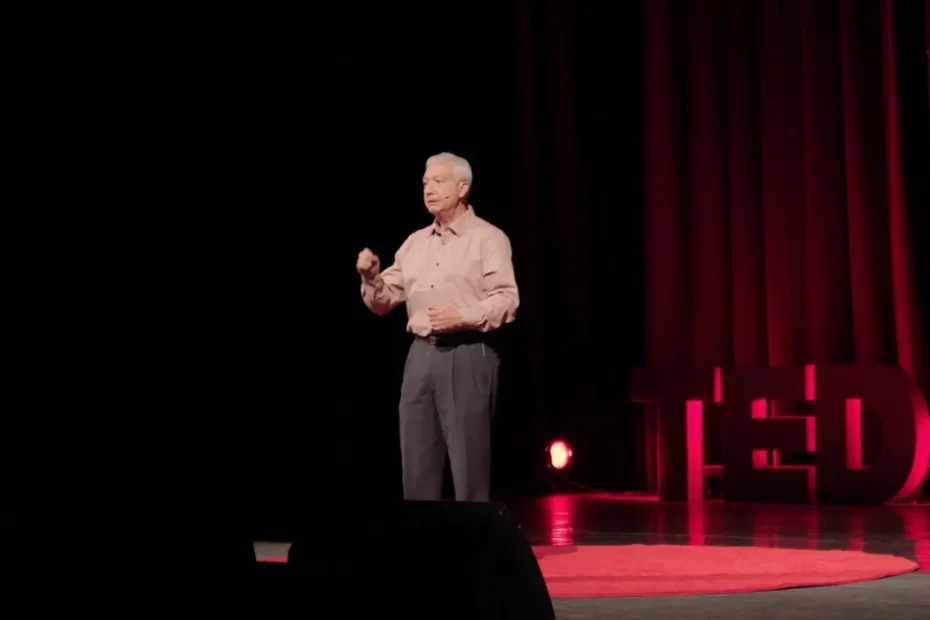
John Tarantino's TEDx talk. Watch on YouTube.
Three Prayers, Answered in Another Way
Oscar was a boy with paper-thin skin, no hair, and a lump in his stomach that hurt every day. Even his mother's arms could not comfort him. He knew his prayers, and he asked God to take him to heaven so the pain would end. The answer arrived in a different life. Oscar endured rounds of chemotherapy and surgeries, and he survived. He became a pediatrician who cares for children with cancer. Tarantino is confident Oscar will reach heaven in the right time, for the love and compassion he shows those children.
This is Live Smart, the first of the Three Wisdoms in The Wisdom Model: wisdom activated through action. Oscar turned the hardest stage of his life into the daily practice of his livelihood. The children he treats see a doctor who has lived what they are facing.
Haki arrived in New York City from Turkey with little English and no success finding a job. His money ran out, and he lived on the streets. One night he was beaten and left for dead in a dumpster behind a pizza restaurant. Unable to move, he heard a garbage truck and a trash compactor coming closer. He asked God to protect his family in Turkey, to forgive his sins, and to welcome him into paradise.
Before the truck reached him, the restaurant owner ran out and told the driver to wait because he had more trash from the night before. When the owner lifted the lid, he heard a weak voice say, “Please, please help me.” The owner arranged medical care, and after a long recovery Haki joined the restaurant staff. Today he owns 10 pizzerias in New York City, and his family from Turkey runs them alongside him. Some of the people who come through his doors do not pay. They are the homeless, and Haki calls them his other family. He gives them food and jobs, and every day he checks the dumpster before the compactor comes.
This is Give Smart, the second Wisdom: giving with intelligence and intention. The owner who stopped a truck began a network of reciprocity, and Haki extends it. He addresses the root need, a place to belong and a means to earn, because he once lived without both.
Pat was Tarantino's wife of 45 years. The John in the third story is Tarantino himself, speaking about his own marriage. Pancreatic cancer took her. In hospice, Pat, once young, beautiful, and joyful, lay frail and weak. She prayed for a second chance at life, and she asked her husband whether he would choose her again, knowing how things would end. Tarantino answered:
“If God gave me a million lives, I would choose you a million times over.”
John Tarantino, speaking to his wife, Pat
Tarantino told Pat's story in his first TEDx talk, and he tells it again here. This is Leave Your Mark, the third Wisdom: capturing words, actions, and Relationship Riches, and sharing them so a living legacy continues after direct influence has passed. Tarantino chose to say his promise to Pat out loud on a public stage, where it reaches people who will not meet either of them. Beyond you. Because of you.
One Tree, Many Branches
Tarantino asks his audience to think about the child they were: what they believed would make them happy, where they wanted to live, who they wanted to become. That life differs from the one they live today, and he calls that a good thing. Lives are meant to be dynamic. One tree of life holds many branches, and they spread in different directions.
The arc of a life in the Masterwork Years follows those branches: learning, livelihood, Masterwork, and legacy. Each is a discrete life with its own purposes and its own wisdom. Masterwork develops from the decades of experience gathered in the first two, and it becomes legacy in the fourth.
The arc of a life in the Masterwork Years: four discrete lives on one tree.
Masterwork is not necessarily developed in every life, and the choice to develop it belongs to the person living it. The Masterwork Years begin when learning and livelihood have given you decades of experience worth sharing.
The Answer Written in 724 Journals
Tarantino's belief that these lives share a thread rests on data as well as faith. The Harvard Happiness Project began in 1938, 87 years ago, and remains the longest study of what makes people happy. It started with 724 young participants, and a handful are alive today at more than 100 years old. Decade by decade, each participant was asked what makes you happy and recorded the answer in a journal. The answers changed so much that the entries of a long-lived participant read like the writing of different people.
One answer held through every decade: sharing life with others. Loving relationships led to longer, healthier, happier lives. Tarantino calls this the soul's design, since we were created to have others in our lives.
In Masterwork, these are Relationship Riches. They stay constant across every branch of the tree, and they travel with wisdom when it is passed on. Oscar's patients, Haki's other family, and the audience hearing Tarantino's promise to Pat are the people who receive what each of these men gathered.
Wisdom Made Whole
Oscar's livelihood is pediatric oncology. His legacy is the children who grow up knowing that a person who suffered as they did survived and stayed to help. Masterwork lives in the space between livelihood and legacy, where decades of experience are gathered and made ready for others.
Wisdom has a half-life. Masterwork makes it whole. The memory of a boy in pain could have faded over the decades for Oscar. By turning it into daily care for each new patient, he keeps it at full strength, and it grows with every child who hears from him that survival is possible.
Haki's night in the dumpster and Tarantino's vow to Pat in hospice follow the same course. Left with the men who lived them, those moments would end with those men. Told, practiced, and passed on, they become Masterwork, and Masterwork becomes legacy.
Think about the branches of your own tree. What have your first two lives taught you, and who is waiting to receive it?
Tarantino closes with a hope that, in the right time, he will be together with Pat again, and that the two of them will meet Oscar and Haki and share their stories. Until then, the stories travel on their own, a worthy ending for all involved and a beginning for those who hear them.
The Masterwork Years is the stage of life those stories point toward. It is also the subject of Sherrie Rose's sixth book, The Masterwork Years: Why Masterwork Matters As AI Advances, and the home of this article. Explore the stage decade by decade at masterworkyears.com, and begin gathering what your own branches have taught you.

The Masterwork Years
Why Masterwork matters as AI advances, by Sherrie Rose.
Read More →